





Headout logo. Link to home.

Help

Sell on Headout

Whale Watching

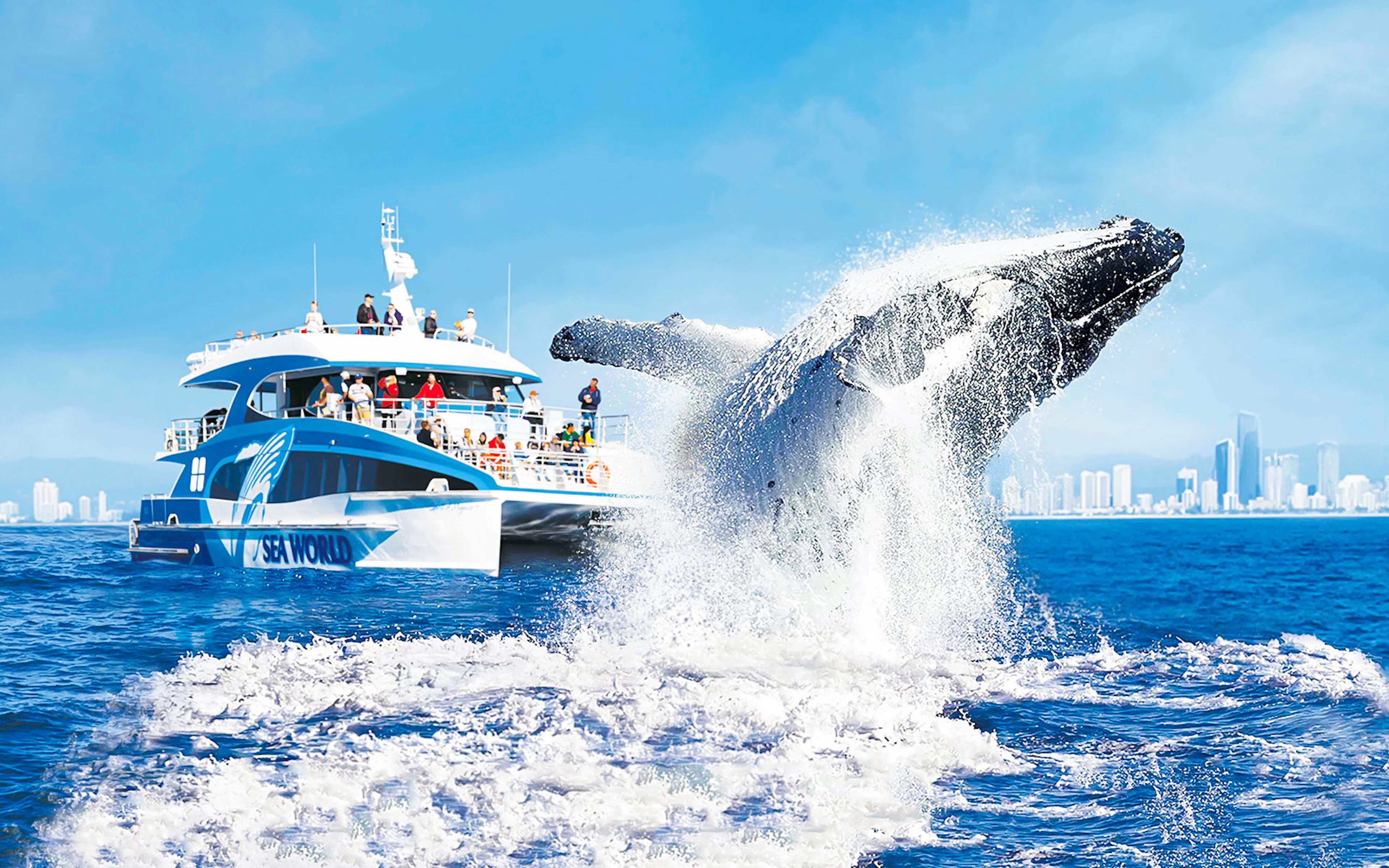
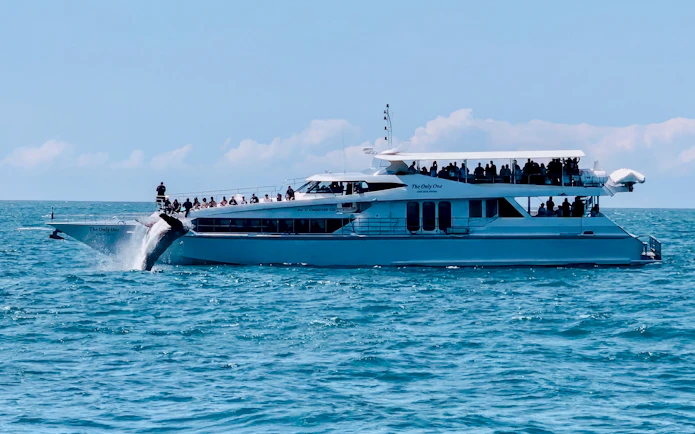
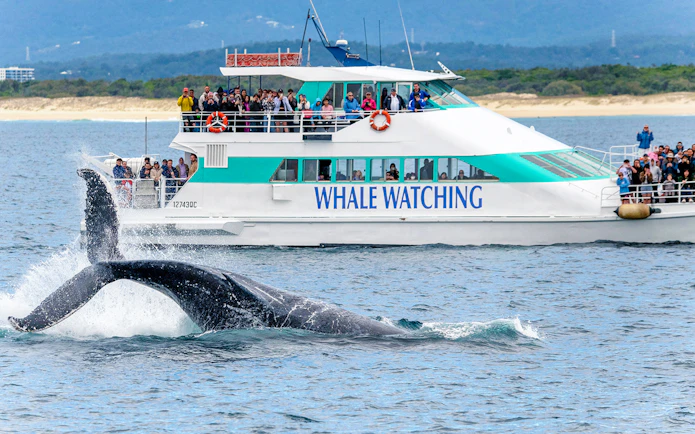
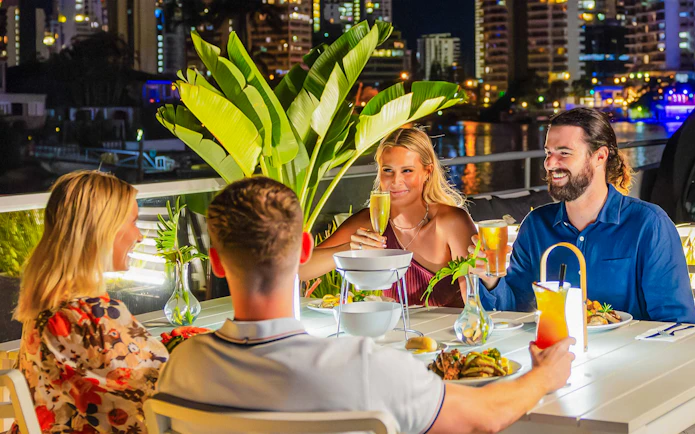
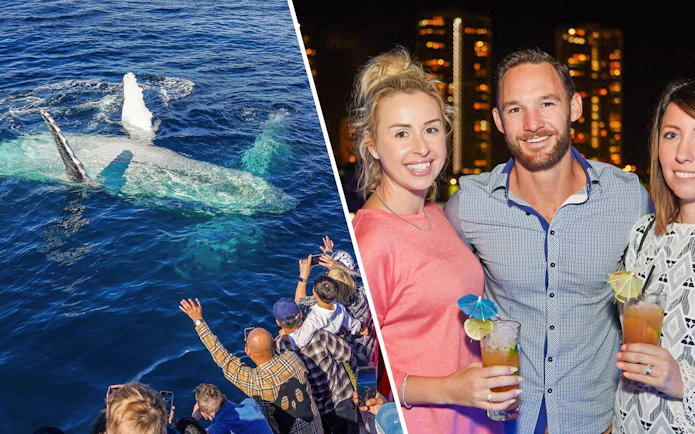
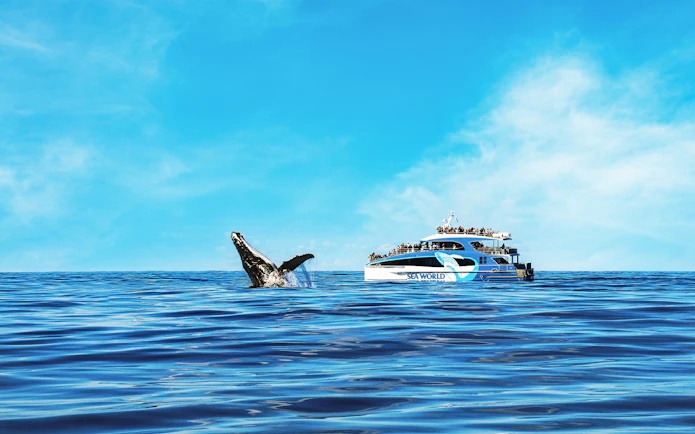
Embark on a once-in-a-lifetime kind of experience of whale-watching across the Australian waters. Witness humpback whales, in their element, playing in the water or slapping their majestic tails in the air. While you are at it, make use of the waterfront deck cafe, bar, and gift shop, all available onboard.
Why head out with Headout

Similar things to do in Gold Coast

Browse by themes

Nearby cities to explore

Whale watching in Gold Coast at a glance

  • Season: Late May to early November; most reliable humpbacks June through October
  • Duration: 2–4 hours depending on operator, vessel type, and route
  • What you'll see: Humpback whales; sometimes dolphins, sea turtles and seabirds also present
  • Vessel options: Large catamarans, multi-deck cruisers, smaller adventure boats and sailing catamarans
  • Thermal gear: Not provided; dress in warm layers and windproof outerwear
  • Guide: Skipper and crew provide live marine-life commentary throughout the cruise
  • Departure point: Sea World Marina at Main Beach and Surfers Paradise river terminals
  • Best for: Families, first-time whale watchers, photographers, and visitors combining with other Gold Coast attractions

Which Gold Coast whale watching cruise is right for you?

Your main choice is between a large, stable catamaran-style vessel, a smaller more intimate boat that feels closer to the water, and premium or bundled formats that trade time and comfort against a fuller day out.

Standard Large-Vessel Whale Watching Cruise

A classic 2–2.5 hour offshore cruise on a stable, multi-deck vessel. Choose this if you want maximum comfort, indoor seating, and space to move around while still getting strong chances of sightings. It suits mixed-age groups and anyone nervous about seasickness or crowds on very small boats. You trade a more intimate feel for stability, facilities, and an easier overall experience in open-ocean conditions.

  • Departure point: Main Beach or Surfers Paradise marinas; self-arrival required
  • Vessel: Large catamaran-style vessel with indoor cabins and multi-level outdoor decks
  • Duration: Around 2–2.5 hours on the water, plus check-in time
  • Group size / privacy: Dozens of passengers; shared decks and railings throughout
  • Guide format: Live skipper or marine guide commentary over loudspeakers
  • Pace / comfort: Relaxed; smoother ride, indoor seating, toilets and snack bar
  • Includes: Whale commentary, viewing decks, basic refreshments available to purchase

Small-Boat Intimate Whale Watching Cruise

A smaller, more agile vessel with far fewer passengers and a closer-to-water perspective. Choose this if you prioritise a personal, less crowded feel and don’t mind more motion and exposure to wind and spray. It’s often preferred by photographers and repeat whale watchers who want unobstructed views and easier interaction with the skipper. You trade some stability, space, and shelter for intimacy and a more adventurous atmosphere.

  • Departure point: Typically Surfers Paradise or smaller marinas; self-arrival required
  • Vessel: Smaller open or semi-enclosed vessel sitting low to the water
  • Duration: About 2–3 hours including transit through the Seaway
  • Group size / privacy: Roughly 8–20 guests; everyone close to the rail
  • Guide format: Skipper or guide providing informal, conversation-style commentary
  • Pace / comfort: More energetic and bouncy; limited indoor shelter from elements
  • Includes: Whale commentary; minimal onboard facilities, sometimes light refreshments

Whale Watching Cruise with Hotel Transfers

This is essentially a standard large-vessel cruise bundled with coach or shuttle transfers from selected Gold Coast areas. Choose this if you’re car-free, staying further from the marina, or want to avoid navigating traffic, parking, or public transport. You get the same on-water experience as the base cruise, but trade some flexibility and extra time for simpler logistics and door-to-door convenience.

  • Departure point: Hotel or central pickup points, then marina check-in as a group
  • Vessel: Large, stable whale-watching vessel used on the standard cruise
  • Duration: Around 2–2.5 hours on water; roughly 4–5 hours door-to-door
  • Group size / privacy: Standard boat capacity; shared coach transfers with others
  • Guide format: Onboard commentary only; transfers are transport, not guided tours
  • Pace / comfort: Relaxed on water; structured schedule due to fixed pickups
  • Includes: Return hotel transfers plus standard whale-watching cruise inclusions

Premium Lounge Upgrade on Large-Vessel Cruise

A premium seating tier on the main large vessel, usually in a quieter indoor lounge with reserved seating and extras. Choose this if you value guaranteed space, reduced crowding, and an easier viewing routine. You still join the same cruise and see the same whales as standard guests but with priority boarding, a calmer base, and included drinks or snacks. You trade extra cost for comfort, elbow room, and less time competing for rail spots.

  • Departure point: Main Beach marina check-in; priority boarding lane where offered
  • Vessel: Large catamaran with exclusive upper-deck lounge and semi-private deck
  • Duration: Same 2–2.5 hour cruise; you simply occupy a premium area
  • Group size / privacy: Small lounge group within larger passenger complement
  • Guide format: Main commentary plus occasional direct interaction in lounge
  • Pace / comfort: Very relaxed; plush indoor seating, climate control, easy rail access
  • Includes: Reserved lounge seating, priority boarding, selected drinks and snacks

Whale Watching and Theme Park Combo Day

A bundled product pairing a standard whale-watching cruise with entry to a theme park, most often Sea World. Choose this if you already plan to do both and want to compress them into one or two days with a single booking. It turns whale watching from a half-day into a full marine-focused outing. You trade flexibility and downtime for convenience, potential savings, and a very full schedule, especially with children.

  • Departure point: Typically Sea World marina for the cruise; adjacent theme park entry
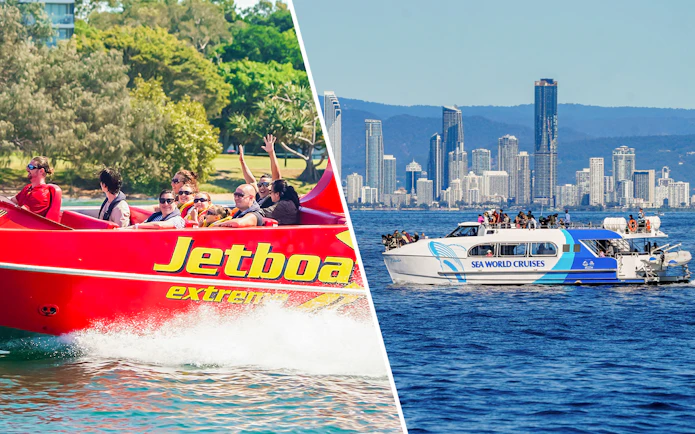
  • Vessel: Large whale-watching vessel operated from the Sea World Cruises terminal
  • Duration: Half to full day once cruise and theme park time are combined
  • Group size / privacy: Standard cruise capacities; theme park crowds vary by day
  • Guide format: Live commentary on cruise; scheduled shows and signage in park
  • Pace / comfort: Busy and structured; minimal downtime if using both components same day
  • Includes: Whale-watching cruise ticket plus same- or separate-day theme park admission

All Gold Coast whale watching options involve wild animals in open ocean. Sightings, behaviours, and sea conditions can vary and are never guaranteed, even in peak season. Most operators offer a free return cruise if no whales are seen, subject to availability and timing, but refunds are uncommon.

Whale sightings & season in Gold Coast

Best time to go: The Gold Coast whale-watching season runs from early June to early November, tracking the humpback migration past the “Humpback Highway.” Peak months are mid-June to mid-July for the northbound migration, and September for the southbound return with many mothers and calves lingering off the coast. Late May and early June, plus late October, are usable shoulder periods but whale numbers are thinner and trips are more weather-dependent.

What you're likely to see: Humpback whales are the headline species and are reliable in season, especially from June to October. Dolphins are common as secondary sightings around the boat. Sea turtles and seabirds (like gannets and terns) are occasional extras. Other whale species are rare and should be treated as a bonus, not an expectation. Most Gold Coast operators offer a free return cruise if no whales are seen on your trip. Sightings are never guaranteed, but operators are good at finding them in season.

Responsible whale watching: A must-do

Gold Coast whale watching cruises operate under Australian whale protection regulations and standard marine wildlife guidelines.

  • Low-impact vessels: Operators use stable catamarans and modern cruisers that minimise underwater noise and avoid sudden, high-speed manoeuvres near whales.
  • Regulated approach distance: Captains follow Australian rules by slowing to idle and maintaining at least 100 metres from adult humpbacks.
  • No pursuit policy: If whales move away or dive repeatedly, vessels hold position or slowly depart rather than following.
  • Controlled congregation: Skippers coordinate by radio so only a limited number of boats are near the same whale pod at once.

These practices have been standard on Gold Coast whale cruises for many years.

What a whale watching day looks like in Gold Coast

Busy marina check-in with passengers and boats

Check-in at the marina

Arrive at the Sea World or Surfers Paradise terminal, collect boarding passes, and listen to a short safety briefing. There’s a buzz on the dock as people eye the boats and the open Seaway ahead.

Boat cruising through changing sea conditions

Cruise out through the Seaway

The vessel eases through calm Broadwater, then hits the open Pacific where swell and wind pick up. For 20–30 minutes, passengers switch between rail and cabin, feeling the boat rise and fall while guides explain whale behaviour.

Passengers scanning the horizon for whales

The search for whales

Engines throttle back and the slow scan begins; everyone spreads along upper and lower decks, watching empty blue and distant splashes. This phase often lasts an hour or more as the captain shifts course.

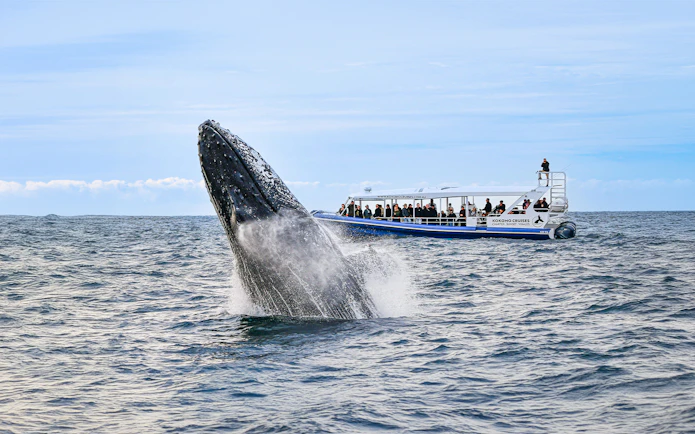
Whale breaching near the boat

Whale encounters offshore

When a blow or tail finally appears, the boat repositions at a regulated distance and drifts or idles nearby. Sometimes whales breach or tail-slap dramatically, other times they cruise past more calmly.

Passengers warming up inside the cabin

Warm up and reset

Between encounters, many duck into the cabin or VIP lounge for hot drinks, review photos, and steady their sea legs while keeping one ear on the guide’s updates.

Scenic view of the coastline during return journey

Scenic run back to shore

After leaving the whales, the captain powers back toward the coast, often taking a line that shows off the Surfers Paradise skyline against the hinterland. The ride feels gentler; guests swap stories and step off the boat a few hours after departure.

What to expect from the conditions

  • Climate and cold: Even in sunny winter, wind and sea spray can feel much cooler than on shore; wear warm layers and a windproof jacket.
  • Sea conditions: Boats head into open Pacific swells that can be choppy, especially crossing the Seaway; take motion-sickness medication in advance if prone.
  • Daylight and visibility: Tours run only in daylight, and rain or glare can make whales harder to spot; polarized sunglasses help reduce eye strain.
  • Sightings reality: Gold Coast seasons have strong success rates, but whales are wild and behaviour varies; there is always a small chance of few or no sightings.

A larger, more sheltered vessel suits anyone sensitive to cold, motion, or rough water.

What to expect from the conditions

Image illustrating rough sea conditions during whale watching

What to expect from the conditions

Winter air can be cool and windy offshore; dress warmly. Cruises face choppy swells and varying daylight conditions. Humpbacks are wild; free-return guarantees may apply.

Your whale watching tour boarding points in Gold Coast

Sea World Cruises Terminal, Main Beach

Sea World Cruises Terminal, Seaworld Drive, Main Beach QLD 4217, beside Sea World theme park on The Spit.

View on Google Maps

Getting there

  • By car/taxi: Around 10–15 minutes from central Surfers Paradise via Gold Coast Highway and Seaworld Drive.
  • By G:link + taxi: Tram to Main Beach station, then short taxi/rideshare north along Seaworld Drive.
  • By G:link + bus: Tram to Main Beach; connect with local bus toward Sea World area (check Translink site).
  • On foot: Walkable from Main Beach/Spit hotels; allow 15–30 minutes depending on exact location.

  • Arrival: Arrive 30 minutes early for check-in, safety briefing, and to choose preferred deck position.
  • Famous for: Adjacent to Sea World theme park and Broadwater views along The Spit.

Surfers Paradise River Cruise Terminals

Surfers Paradise river wharves near Cavill Avenue, Surfers Paradise QLD 4217, on the Nerang River behind the main beach strip.

View on Google Maps

Getting there

  • On foot: 5–15 minute walk from most Surfers Paradise hotels via Cavill Avenue toward the river.
  • By G:link: Alight at Cavill Avenue or Cypress Avenue stations, then walk a few minutes to riverside jetties.
  • By car/taxi: Short 5–10 minute drive from nearby suburbs; use central Surfers Paradise parking structures.
  • By bus: Local buses serve Surfers Paradise; alight near Cavill Avenue and walk to the riverfront.

  • Arrival: Arrive 30 minutes early to clear check-in, navigate busy jetties, and secure rail-side spots.
  • Famous for: Central Surfers location with skyline views and Nerang River canal scenery on departure.

Always confirm the exact marina, street address, and pier/berth details on your booking confirmation.

Plan your visit

Timings & duration

  • Operating season: Late May/June to early November; no regular tours outside these months.
  • Daily departures: Mainly morning and late-morning, with extra early-afternoon sailings in peak winter school holidays.
  • Cruise duration: Most tours run ~2.5–3 hours round-trip; a few extended/lunch cruises last up to 4 hours.
  • Check-in time: You’re usually asked to arrive 30 minutes before departure for check-in and boarding.
  • Time-of-day conditions: Mornings typically calmer; afternoons can be choppier.

Tips for the best whale watching trip in Gold Coast

  • Pick the right boat for your stomach: If you’re seasick-prone, book a large catamaran (like Sea World or Spirit) and a morning departure for smoother swell.

  • Use Surfers Paradise departures if you hate logistics: Staying central? Whales in Paradise lets you walk to the jetty, avoiding G:link transfers, parking stress, and rushed taxi rides.

  • Board with a strategy, not at random: On big boats, head straight for an upper-deck corner rail; you’ll see both sides without getting trapped in the bow crowd.

  • Treat VIP lounges as your “base camp”: On Sea World’s Captain’s Lounge, relax inside between sightings and just duck out to the semi-private rail when whales are called.

  • Time your downtime for the boring bits: Use transit time between Broadwater/Seaway phases to rest indoors before rejoining the deck.

  • Think zoomed-out photos, not Hollywood close‑ups: Wide shots from higher decks often capture the majestic blend of skyline, sea, and whales better than extreme close-ups.

  • Use the migration direction to pick your side: Adjust your viewing side based on northbound (June–July) versus southbound (Sept–Oct) runs.

  • Book midweek if you’re crowd‑averse: Weekday cruises often provide more breathing room than busy weekend departures.

  • Leave room after your cruise: Avoid scheduling tight transfers, especially after a Sea World departure, to enjoy a leisurely post-cruise vibe.

Frequently asked questions about whale watching tours in Gold Coast

  • Most cruises last around 2–2.5 hours on the water, plus time for check-in and boarding. Allow 3–3.5 hours door-to-door if you’re staying nearby. A few extended or lunch cruises run closer to 4 hours; always check the duration on your specific tour before booking.

  • Standard tickets usually include the cruise itself, live commentary from the crew or a marine guide, use of onboard toilets, and access to indoor and outdoor viewing areas. Food, hotel transfers, professional photos, and seasickness medication are generally not included unless part of a package.

  • In season (roughly June–October), sighting rates are very high and most trips see humpback whales. However, these are wild animals, so no operator can promise a specific encounter. Many offer a “come again free if no whales” guarantee, which is a re‑visit voucher, not a cash refund.

  • Tours may be cancelled at short notice if wind or swell makes conditions unsafe. In that case you’ll usually be offered a free reschedule or a refund according to the operator’s policy. Book your tour with flexible timing to accommodate potential weather changes.

  • Large boats are more stable with indoor seating and better facilities, making them ideal for families and those prone to seasickness. Smaller boats offer a more personal experience with closer-to-water views but can be bumpier and offer less shelter. Base your choice on your comfort with motion and crowd levels.

  • Morning departures are generally recommended because seas are often calmer and winds lighter. Whale activity is good throughout the day, so the choice is mostly about comfort and scheduling preferences. If you’re prone to seasickness, opt for a morning slot.

  • Plan to arrive about 30 minutes before departure for check-in and boarding. You'll present your voucher, collect boarding passes, and line up at the jetty. Early arrival helps secure preferred viewing spots.

  • If your tour departs from Surfers Paradise, many central hotels are within a 5–15 minute walk. For Main Beach, consider combining the G:link tram with a short bus or taxi ride. Always verify the departure wharf on your voucher.

  • Yes, especially on larger vessels with indoor cabins, toilets, and seating. They are generally family-friendly for school-age kids and seniors, though very young children or frail seniors might need extra caution on rough days.

  • Accessibility varies by vessel. Some large boats accommodate wheelchairs on the main deck and accessible toilets, but upper decks and bow areas may require stairs. Contact the operator if you have specific accessibility needs.

  • Dress in layers with a warm, windproof jacket and wear closed, non‑slip shoes. Bring sunscreen, sunglasses, a hat, and any necessary seasickness medication. A zoom-capable camera is also recommended for capturing distant views.

  • The boat will cross open ocean and the Seaway can be choppy, so seasickness can be an issue. If you’re prone, choose a large vessel on a morning cruise, take motion-sickness tablets as directed, and try to stay near the centre where motion is gentler.

  • The main season runs from about June to October, following the humpback migration. July–September typically offer the highest whale numbers, with early season favoring northbound whales and late season featuring mothers with calves. Outside this period, regular cruises generally do not operate.

  • Standard whale watching cruises are strictly boat‑based; swimming with whales is not permitted due to safety and regulatory reasons. Similarly, drones are usually prohibited onboard during the trip. Enjoy the experience from the deck.

How Headout makes choosing experiences effortless

We curate the best ways to experience

We research and organise all unique experiences - from tickets to tours to special combos - so you get all the choices without the clutter.

We partner with the best

Every supplier is vetted for quality, reliability, and value so you only get top rated experiences. No surprises, no disappointments.

All the best options, in one place

Each experience is thoughtfully organised to give you maximum availability, great value and an easy way to choose.

Book with complete peace of mind

Free cancellations, Flexible payments, and 24/7 support - thoughtfully designed for flexibility, assurance, and total peace of mind.

1/4

Slide 1 of 4

We've served 52 million+ guests and we are here for you

52 million+

Happy customers across 10,000+ experiences

In the media

Featured and recommended by the best brands

24 x 7 help center

Have a question? Live chat with local experts anywhere, anytime